
Tree bolting insights.

Leafguy

New member
Hey,
Screen Shot 2025-11-16 at 10.26.55 AM.webpScreen Shot 2025-11-16 at 10.28.30 AM.webpScreen Shot 2025-11-15 at 6.04.49 PM.webp
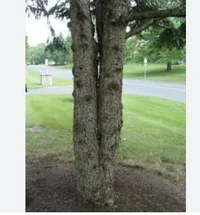
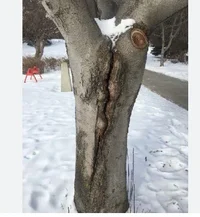
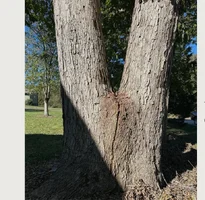
Looking to learn a bit more about bolting and trees that are good candidates vs not. I've attached a few pics I grabbed from the internet. I have the BMP's for tree supports, but looking for some real world insights. The trees that I have more questions about are typically when a shear crack runs into the ground. At this point is a removal preferred if targets are present?

If there is a moderator the feels this should be in another forum, feel free to move it.
 
What specific questions do you have? From the pictures, I would cable all three, and bolt the second and third. Probably one bolt in the second because it looks fairly small, and two bolts in the third because it looks pretty big. Cables are very important though. Also, how much risk can be taken with these trees, any important targets? What value do the trees have to their owners?
 
@Reach I guess the main question would be if the cracks extend all the way to the ground and are present on both sides of the tree, is bolting still a good option? Or is the failure inevitable and the bolts are just delaying that. Cables will be an important part of the equation to mitigate the risk of failure.
 
@Reach I guess the main question would be if the cracks extend all the way to the ground and are present on both sides of the tree, is bolting still a good option? Or is the failure inevitable and the bolts are just delaying that. Cables will be an important part of the equation to mitigate the risk of failure.
In my opinion, bolting is still a good option. It does in part depend on the customer’s risk tolerance, and the number of targets or the value of the targets for the tree. However, I have bolted a number of trees with cracks to the ground. Cable it properly, bolt it properly, and some good reduction pruning would usually be recommended as well.
 
Cables should be installed whenever considering brace rods. IMO if there is a crack steel cabling should be used.
Check out the European standards ours are pretty dated and a revision should be down the pike.

A bolt (or two) should also be considered ABOVE the union about one stem diameter.
Reduction pruning should also be considered part of the cabling/bracing system but should maintain as much leaf/bud volume as possible while reducing loads.

There isn’t enough information shown in your photos to offer much help.
 
2nd pic maple: just the way that's starting out, I'd bet there aren't big enough branches higher in the tree to install a cable that will hold. That's pretty rough looking and apparently a relatively small tree. I'd push for replacement (and I don't do removals, so I'm not trying to talk the client into paying us to do more work for them).

The 3rd pic White oak: cable for sure. Bolts? Probably not gonna be a bad idea. I'd be curious to hear what others think, but the cable will keep that from splitting right and left (as we are looking at it). My thinking on bolts is they will help hold it together forward and back as well where a cable will provide little or no support in that direction.
 
Also, FWIW, as @Reach said think about targets as well. I don't do a ton of support systems, but when I started doing them, it occurred to me: If I were an insurance adjuster and I saw a tree that recently had a cable installed laying on my client's house, I'm probably looking for whoever put that cable in and asking some questions. Essentially when we supplemental support in a tree we are saying "Yeah...that tree isn't strong enough on its own, but I got ya, I'll put this cable or brace in and you are all good." We can follow published standards in doing that, but honestly there isn't a ton or research, and every tree is a little different so its hard to say we are installing a text book system. With that, I called my insurance agent and added professional liability/errors and omissions coverage to the policy.
 

New threads New posts

Back
Top Bottom