Home Blog Page 3

Have More Fun Using Progressive Arboricultural Techniques

0

By Tom Dunlap

Modern technology has come into tree climbing in the same way it has come into the rest of our lives. Arborists arrive on the jobsite driving vehicles with computer controlled fuel injection, carrying cell phones with them up in the trees and using space-age fibers in the ropes. The climbing systems used are much more complex also. Technology makes our lives easier and more fun. We should view technology as a buffet; there are many dishes to try, sample all of them when it’s safe – then go back and load up on your favorites.
When I was 12 years old I started dragging brush for my next-door neighbor. He would drop the limbs from the tree, then his son and I would cut them up with bow saws and stack the brush on a trailer – fairly low tech. Now, technology has come full circle. More and more, my jobs find me pruning small limbs with very efficient handsaws. This style of work doesn’t generate large quantities of brush. Most of the time, I won’t bring a chipper to the job site. Instead, several days worth of trimming go
onto the trailer, which is pulled by a van that is fully equipped and much more comfortable than a chipper truck.
Ours is a very testosterone-charged profession and some don’t want to hear about the precautions we should take to work safely. What does it take to be a tree climber? I bought a book by John Stuart
Martin titled “The Homeowners Tree Book.” In the chapter called Pirates, Gypsies and Nobleman, he writes, “… that any man content to earn their living by climbing trees has to be a little ‘tetched’to start with. They have to be lean, muscular, nerveless, and somehow persuaded that trees are challenging. They must want to climb and conquer them no matter how tall and perilous. Due to their concentration on survival and a pride in their climbing prowess, all tend to be prima-donnas: sensitive to criticism and quick to anger.” This book was written in 1962. Not much has changed, although we have better equipment today.
In my experience, climbers come in two categories – traditional and progressive. One is not better than the other, just different. A traditional climber learned one technique with one rope and sticks with it. You might see that person ascending into the tree using a body-thrust technique rather than learning modern and more progressive ascent techniques. A traditional climber will have a pretty simple climbing system, probably a rope and a rope snap. An incremental piece of equipment might

Using over-the-ear hearing protection with safety glasses can reduce the effectiveness of ear protection b y u p to 10 percent.
Using foot ascenders is sometimes easier than footlocking to ascend ropes.
Have More Fun Using Progressive Arboricultural Techniques M

be a carabiner, which is a step away from using a typical double-locking rope snap. Atraditional climber probably doesn’t use a false crotch for the climbing line, and will only work the outer third of the crown with a pole saw. Another sure sign of a traditional climber is the clunking noise they make from all the steel they carry around.
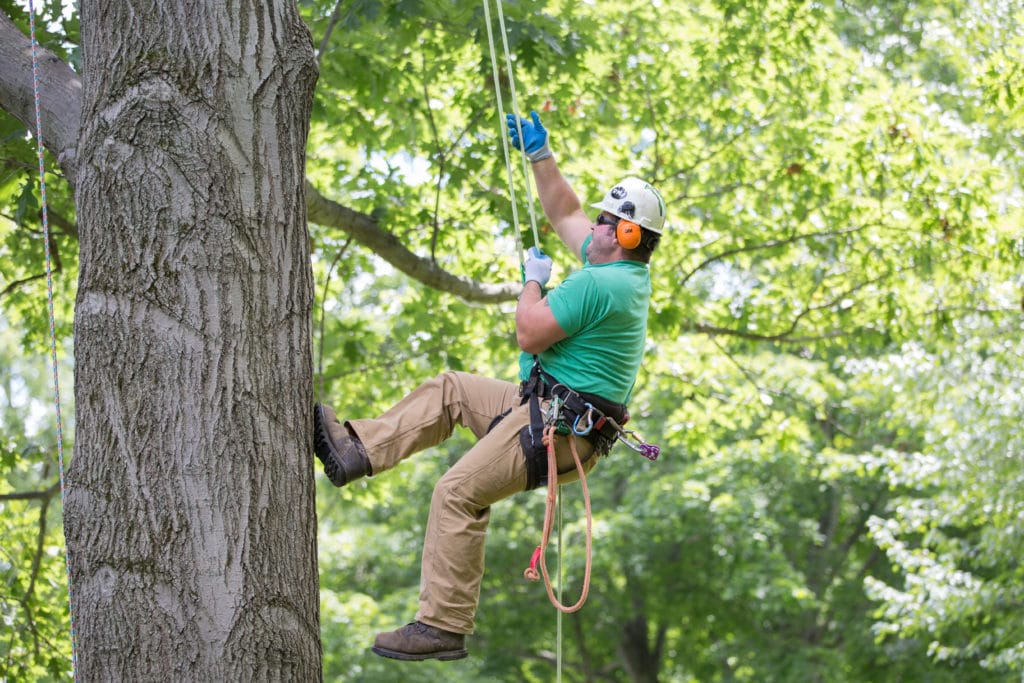
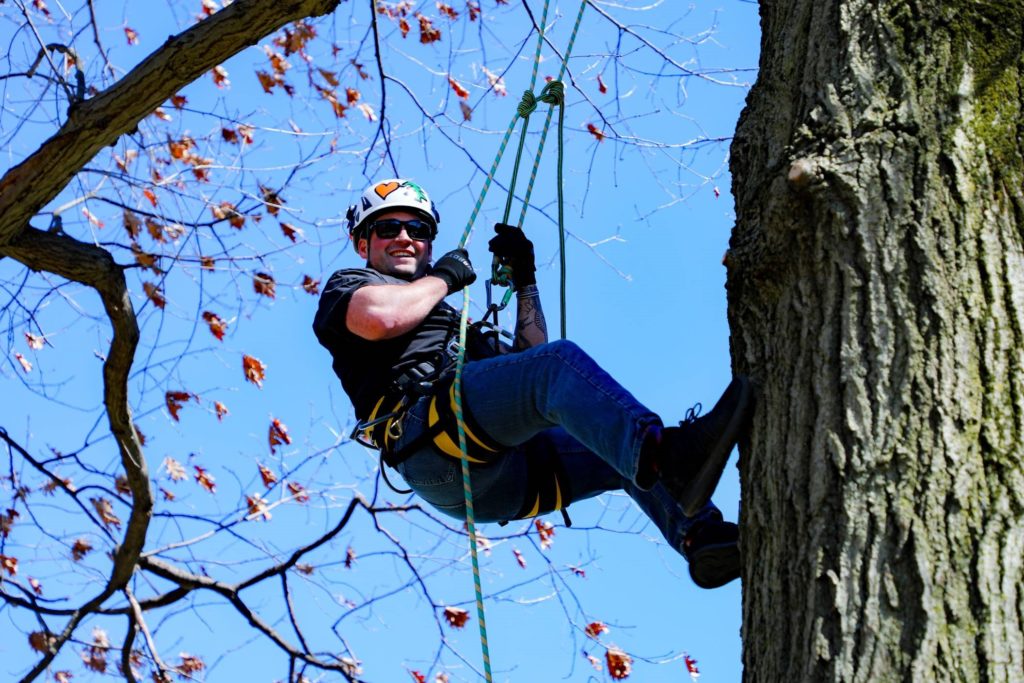
A progressive climber has learned a climbing system and constantly adds new pieces. The goal is to find the easiest way to work. The less energy we spend at work means more energy we have to take home and spend with our families – or to save for the end of our careers. A progressive climber uses a throw line and foot locks into the tree. A progressive climber uses split tails of some kind with a high-performance friction hitch, slack tenders and a false crotch, because it provides higher performance and saves wear and tear on the rope. A progressive climber works out to the tips of the branches with a handsaw. If a chain saw is used, it will probably be in the inner half of the tree. The progressive climber rarely uses pole saws because they have learned how to climb out onto the tips of the branches to do very good cuts. The progressive climber jingles to the sound of aluminum as they climb.
Learning new techniques Arborists are scavengers. We have some unique things that we have developed just for working in the trees, but we have gone out and picked out different bits from a lot of related working-rope professions. We have done a pretty good job of adapting tools from other parts of the vertical world, but I don’t think that we have done as good a job of bringing over all the techniques. There are traditions from mountaineering that I see we are starting to build into arboriculture and tree climbing.
Incorporate new tools and/or techniques into your climbing system, but do it ‘low and slow.’ When changes are being made to the climbing system, add them one at a time. Once the climber has mastered the particular application, add another new item. If you are going to add a false crotch

Placing the han d saw on a leg sca bb ar d makes it much easier to access while in the tree.
Taking a d vantage of friction-re d ucing false crotches makes ro p e ten d ing easier.
During ice storm cleanu p , cram p ons an d stiff, p lastic b oots can p rovi d e goo d sta b ility an d traction. They can only b e use d for removals though. Having the front p oints makes ascen d ing an d p ositioning much safer.
to your climbing system, don’t take that throw line; shoot it up to the top of the tree and start to figure out how to set the false crotch. Do it on a branch 6 feet off the ground. Work with the new procedures, experiment with them and take your time.
Single Rope Technique Single Rope Technique (SRT) is gaining popularity as an access system. The access line is set in the tree and anchored at the
base. Once the climber gets to the tie-in point, they can set up a Doubled Rope Technique (DRT) – sometimes called a traditional system – for moving around the tree. There are many advantages of SRT. One of the biggest is that a line is always set in case an aerial rescue needs to be performed. Having the line installed will save time getting the rescue climber close to the patient. Some tree climbers are working in the tree using SRT.
False crotches Adjustable false crotches (AFC) can be made with readily available components. Using a false crotch reduces rope wear and damage to the tree from the rope moving over the bark. The climber uses less energy to move up the rope. Another use of the adjustable false crotch is for working down the spar. Choking the AFC against the trunk allows the climber to move down the trunk and be secured in an overhead climbing system. When the climber is ready to descend, the system is ready to go.
Gloves Thin grippy gloves allow the climber to hold tools and branches with less force. Since the sticky coating holds better, the climber saves energy. When climbing the rope, the tacky grab helps the climber. Also, the gloves protect the hands from minor cuts and scratches.
Lanyard The lanyard that I’m currently using is double-ended, double-adjusting – or DEDA. The 20-foot lanyard has a snap on each end. An adjuster is on each hip with color-coded snaps. Having the DEDAlanyard gives me a lot of tie-in possibilities. With the long length, it becomes a second, short climbing line, too.
Leg scabbard Having the handsaw in a leg scabbard is so much handier than having it on one’s hip. Getting the saw is easier because the handle is at arm’s reach all of the time. Instead of being on the saddle along with lanyards, chainsaws and other gear, the climber only has to reach down to get the saw.
Hearing and head protection The orange ear protectors are rated for 22 dB attenuation; the black are rated for 27 dB. Studies have found that, generally, over-the-ear protectors lose about 10 percent of their efficiency because of poor fitting over eyeglasses and hair. With insert protection, closer to 100 percent protection can be attained. Using earplugs attached to the glasses keeps them handy all of the time.
Kevlar helmets give more protection to the climber’s most important tool, his or her head. Any helmet without a chinstrap is likely to get bumped off at some time – usually the worst time. Chinstraps can be added to helmets.
Crampons During ice storm cleanup I’ve found that using my crampons and stiff, plastic boots gives me good stability and traction. They
can only be used for removals though. Having the front points makes ascending and positioning much safer.
Conclusion When I teach people a new knot, I won’t let them use it in a tree until they can tie it without looking. Once they can do it by feel – and learn its applications and shortcomings – only then can they use it in the field. This is important because there may be times when the sweat is burning your eyes and you can’t really see the knot. I want my climbers to know a knot by feel as well as by looking at it. I also expect them to stop and check their gear regularly. I
constantly go through my system doing gear checks. Every time I clip and unclip, I look at my system. This only takes moments. I want to make sure that something didn’t change five or 10 minutes ago.
I hear a lot of people say that tree work is a skill. Others say that tree work is like chess. To me, tree work is like backgammon; a lot of skill involved, but there is also an element of luck. Fortunately, I have had the good luck of being on the winning end.
Tom Dunlap is owner of Canopy Tree Care in Robbinsdale, Minn.

Ice clim b ing cram p ons shoul d only b e use d for removals, as they can d amage a healthy tree.
ACRT Services companies recognized by the Utility Arborist Association with Educator and Partners in Excellence Awards

0

November 15, 2019Stow, OH — ACRT Services offers expert independent consulting solutions to utilities and associated organizations throughout the United States, including vegetation management consulting, arborist training, customized safety courses, technology solutions, utility metering services, and more. The two independent utility vegetation management companies under ACRT Services, ACRT, and ACRT Pacific, were presented with the Utility Arborist Association’s (UAA) Partners in Excellence (PinE) award, while Renee Bissett received the Educator Award during the 2019 annual meeting.

UAA Educator Award

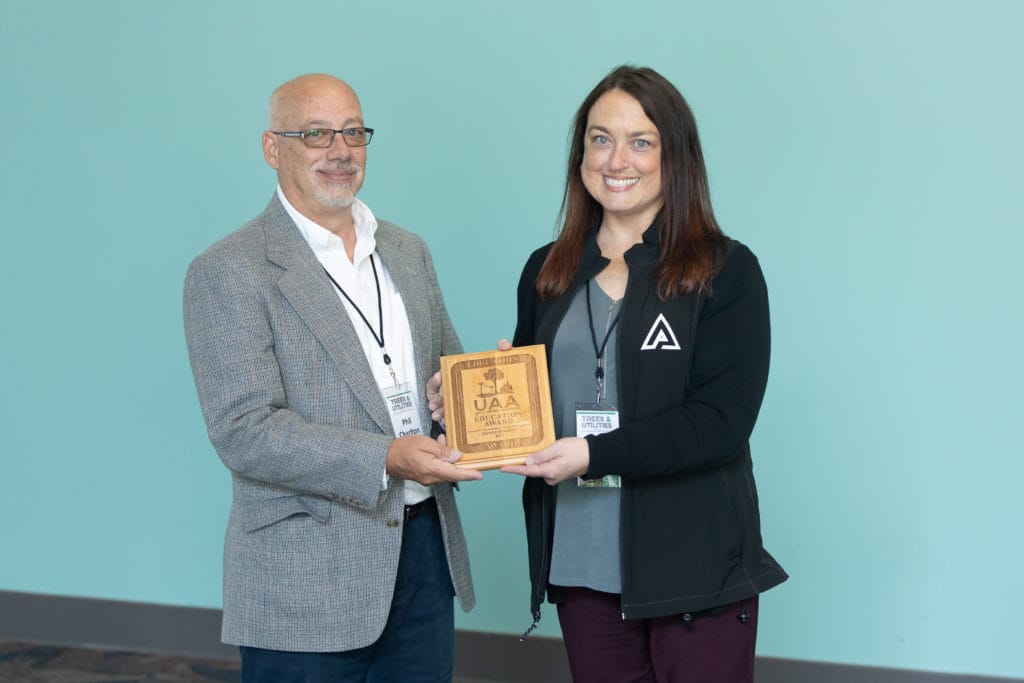
The UAA Educator Award is given to industry professionals who are recognized for their role in educating and training others in the utility vegetation management industry. ACRT Services marketing communications manager Renee Bissett was presented with the award for 2019.

Bissett is the first woman to receive the award in its history and the second person from ACRT, with the first being the organization’s founder Richard Abbott in 2001. Bissett has been active in the UAA for 15 years, serving on numerous committees and providing support for marketing, conferences, and annual events.

“It’s been an honor to be part of the UAA for all these years,” Bissett said. “This is an amazing industry that truly makes an impact on people’s lives. Being able to guide the training and education of those who do this important work has been rewarding. I’m grateful to the UAA for honoring me in this way, and I look forward to continuing my involvement.”

Bissett was nominated by Nelsen Money, who she has worked alongside closely on the editorial committee for ten years. Money, retired from Pacific Gas and Electric, cited his main reasons for the nomination as what Bissett has done for the publication. What once was three or four issues grew to six or more under Bissett’s direction and organization. She was able to help create thoughtful and insightful pieces for each issue that would focus on a feature or topic such as safety or technology, and that was all thanks to her drive and commitment.

“Renee has been a great resource to us in so many ways as far as the publication itself. Everything from formatting to how to better promote the advertising part to our industry, to how to better organize the issue itself,” Money said. He continued, “Renee really is just an amazing asset, and that is why we produce such a quality educational publication.”

PinE Award

The Partners in Excellence (PinE) Award is given to organizations whose membership in the UAA and supporting activities — such as sponsorship, active committee volunteerism, and more — quantifiably demonstrate active involvement over the association’s previous fiscal year. Organizations are given a PinE score based on these activities and recognized at the UAA annual meeting.

“We’re honored and humbled to have been recognized with the PinE Award each year since its inception in 2016,” said Mike Weidner, ACRT Services Chief Executive Officer. “We believe in the UAA’s mission drive excellence, innovation and change through professional development, outreach, research, and the promotion of best practices within the utility vegetation management industry. That’s why we provide our employees with a free membership to the UAA annually. This award is a reflection of our commitment to the UAA’s mission, and I’m proud of our team for working so diligently to further it.”

To learn more about the Utility Arborist Association and its award programs, visit www.gotouaa.org.

About ACRT Services

ACRT Services offers expert independent consulting solutions to utilities and associated organizations throughout the United States, including vegetation management consulting, arborist training, customized safety courses, technology solutions, utility metering services, and more. ACRT Services supports three wholly-owned subsidiaries — ACRT, ACRT Pacific, and Bermex. To learn more about ACRT Services, visit careers.acrt.com.

ACRT Services Announces Changes in Leadership Throughout Organization

0

November 14, 2019 Stow, OH — The ACRT Services family of companies offer expert, independent consulting solutions to utilities and associated organizations throughout the United States, including vegetation management consultation and training, customized safety courses, technology solutions, and utility metering services. An employee-owned organization that focuses on empowering employees, customers, and the communities they serve, is proud to announce promotions throughout the entire family of companies, which consists of ACRT, ACRT Pacific, and Bermex.

Troy Ross has been named the new executive vice president of operations at ACRT Services. Ross began his career in 1999 as a contract utility forester and was most recently president of ACRT. In his new role overseeing all ACRT Services companies, he will be responsible for maintaining a great working culture for employees and customers. As ACRT Services strives to become a larger and better organization, Ross looks to continue providing the organization with exceptional leadership and innovative thinking, while creating new opportunities for talented individuals within the organization. Ross holds a Bachelor of Science from Union University in Organizational Leadership and is pursuing his Masters of Business Administration from Ashland University.

Creating a new department of ACRT Services as the executive vice president of revenue, John Wasmer will oversee the business development management group and the marketing and communications department. Wasmer began his career with ACRT in 2003 on the Nashville Electric Service contract as a contract utility forester and most recently became the first president of the newly formed ACRT Pacific. He will focus on growth and diversification of revenue and strengthening communications throughout the organization. Wasmer attended West Virginia University where he obtained a Bachelor of Science in Forest Resources Management.

In addition to these promotions, three individuals who previously served as directors have moved up to become presidents of the three ACRT Services subsidiaries.

Kevin Puls, the newly named ACRT president, began his career as a contract utility forester in 1997. Throughout the past 22 years, he has demonstrated his ability to be flexible and adapt while growing within the company, priming him for this position. He attended Mount Union College where he earned a Bachelor of Science in Biology. In his new role, Puls looks forward to the opportunity to lead ACRT through the rapidly changing environment of the utility vegetation management industry.

With more than 20 years’ experience working on the largest utility in California. Brian Joiner has been named the new president of ACRT Pacific. Joiner will head our California team as they focus on growth and excellent customer service. Joiner holds a Bachelor of Science in Parks and Natural Resource Management from California State University, Chico. Joiner is looking forward to providing ACRT Pacific customers with new lines of service and working to further the personal and professional development of his employees.

Kenny Murphy has been named the president of Bermex. Murphy came to our organization as a contract utility forester back in 2005, after previously running a utility division in Texas. Murphy holds a Bachelor of Science from Stephen F. Austin State University in Forest Management. Assuming his new role, Murphy is excited to lead Bermex as they look to bring added innovation and technologies to their customers while continuing to grow the organizational footprint nationwide.

“The individuals promoted within our organization have demonstrated tremendous dedication and hard work during our growth over the years,” said Mike Weidner, CEO of ACRT Services. “We are looking forward to seeing how they can impact our organization, as well as see what those who will take over their previous positions can do to propel us forward.”

About ACRT Services

ACRT Services offers expert independent consulting solutions to utilities and associated organizations throughout the United States, including vegetation management consulting, arborist training, customized safety courses, technology solutions, utility metering services, and more. ACRT Services supports three wholly-owned subsidiaries — ACRT, ACRT Pacific, and Bermex. To learn more about ACRT Services, visit careers.acrt.com.

Is ‘Megatron’ the future of tree trimming?

0

Revolutionary machine makes trimming and tree removal safer

By Erik Avanier – Reporter Posted: 7:29 PM, June 14, 2019Updated: 12:31 AM, June 15, 2019

https://youtu.be/VAbxDcYYsnU

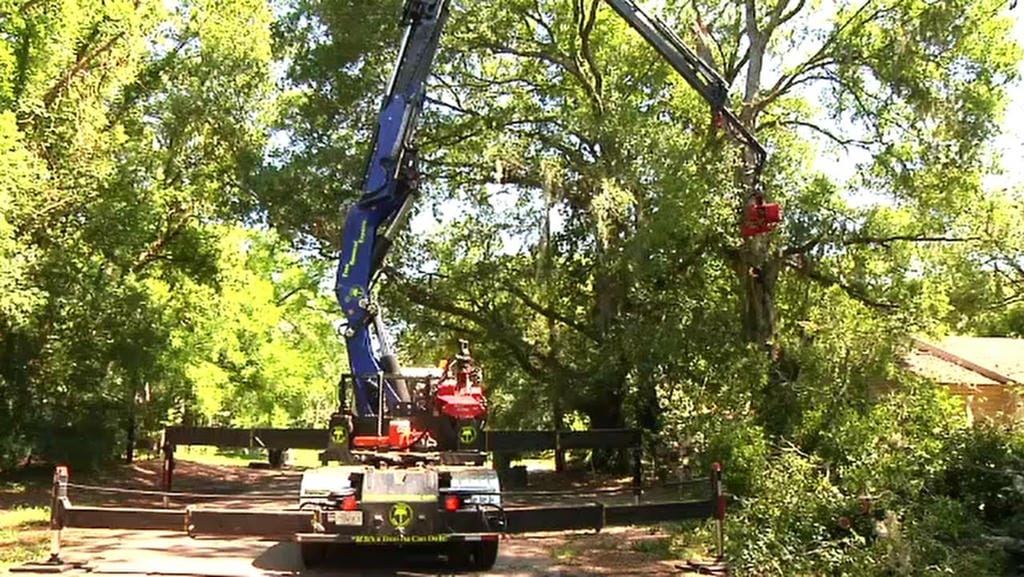
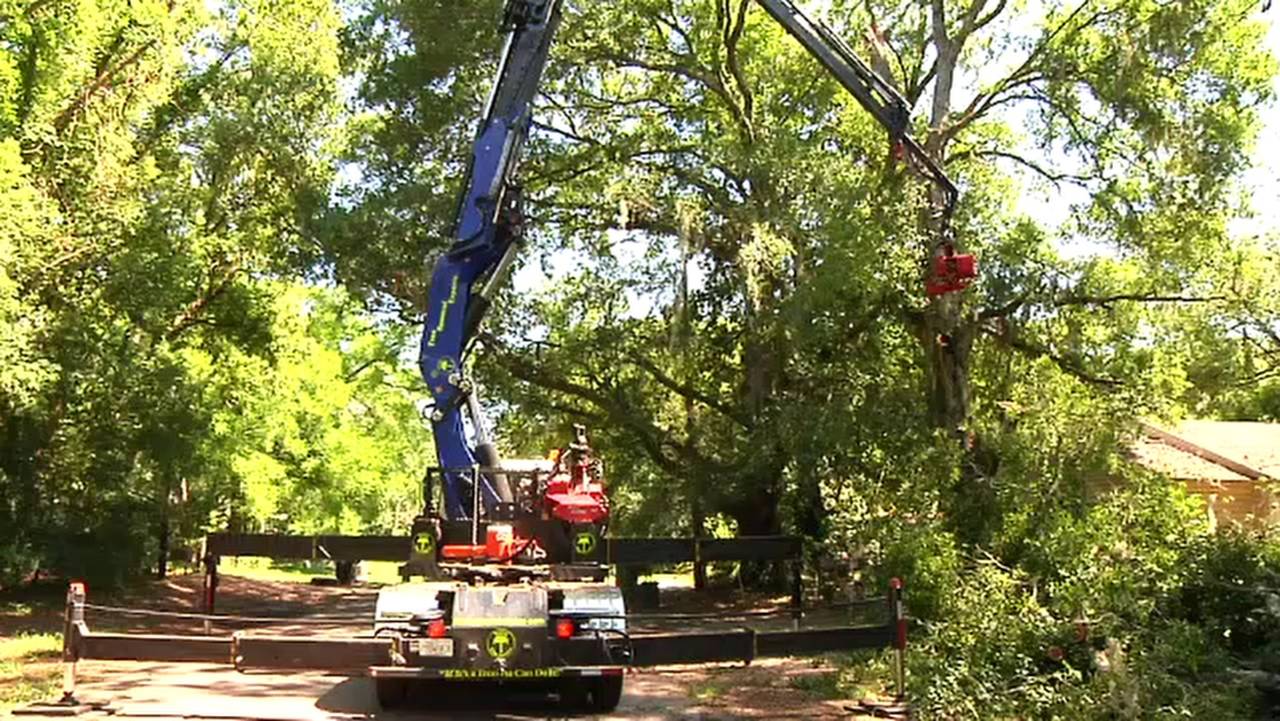
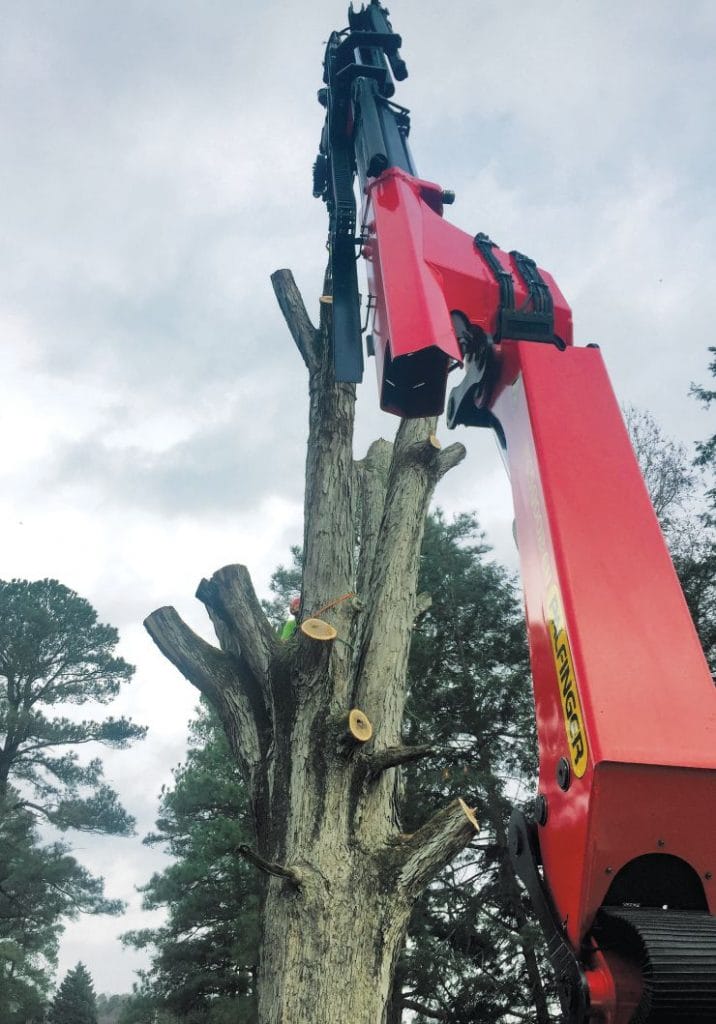
JACKSONVILLE, Fla. – Professional tree trimmers call it a grapple saw crane, but Canary Tree Trimming owner Justin Hartmann simply calls it Megatron.

That’s because, much like the character from Transformers, Megatron can transform, only in this case, the machine becomes a tool that makes tree-triming and removal much safer.

A man who fell Thursday while trimming a tree in Northwest Jacksonville placed a spotlight on the dangers of tree trimming. While the man survived, he has serious injuries. Others have died.

Between 2012 and 2016 in Northeast Florida, there have been eight deadly tree trimming incidents. The youngest was a 14-year-old who fell to his death in the summer of 2013. The oldest was a 76-year-old who died in 2014 when part of a tree fell on him.

Megatron not only eliminates the need for tree trimmers to climb, it also eliminates the need for an operator to sit in the truck or stand close to a tree that’s being trimmed. Hartmann can stand 100 yards away and use a remote to control the machine.

picture name

“With full remote control, I can turn the truck on, shut the truck off, do any function needed by remote and completely take this tree down without being anywhere near it or any of its debris,” Hartmann said. “This is the only machine in the tree service industry that can take a tree down piece by piece without a man ever leaving the ground.”

The crane and grappling system were built in Europe. The truck was built in the U.S., but it was all assembled into one machine in Toronto. The model Hartmann uses can hold up to 6,500 pounds and can extend up to 126 feet.

“There’s only four of these in the country, and we’re the only ones in Jacksonville that have one,” Harmann said.

As for the cost?

“Well over a half-million dollars,” Hartmann said. “People don’t pay for the truck. As you can see, I don’t have six people here. I’m taking this tree out by myself. So the people I don’t have to have here is what pays for this truck.”

Hartmann said the $500,000 investment will become the future of tree trimming.

06-14-19 Megatron Cropped_1560554656175.jpg.jpg

Copyright 2019 by WJXT News4Jax – All rights reserved.

Article link: https://www.news4jax.com/tech/is-megatron-the-future-of-tree-trimming

Five Questions from Individuals Navigating the Tree Care Industry

0

Alex Subak, Arborist Training Coordinator and School Director, ACRT Arborist Training

There is a lack of fundamental training and safety knowledge in tree care. Right off the bat, it just has to be said. There are reasons for this, and debates could rage back and forth for days about the root causes, but stakeholders in the industry most likely know what I am talking about.  The point of this article is not to point fingers but to assist new tree workers, whether they have a passing interest in the field or want to start a tree care company, with some basic knowledge about the industry they have chosen.

As the ACRT Arborist Training coordinator and school director, I am responsible for planning training programs for companies and individuals from A to Z. In this capacity, I receive a lot of initial messages from individuals who use our website to get in touch. They know they need some kind of training, but what training is it? Is training even required? Where can they go for resources, a training calendar, or information on industry certification?

To fill in the knowledge gaps that I feel the industry has, I want to layout five common questions and concerns that arise when people get in touch regarding training, or the tree care industry in general. A brief background:

OSHA – Occupational Safety and Health Administration, an agency of the US Department of Labor that was signed into law in 1970. Designed to provide a safe workplace for the American worker.

ANSI – American National Standards Institute, an organization that sets a voluntary consensus from stakeholders in various industries. The Z133 is a set of standards for tree workers.  


1) Do I have to have training to work as an arborist?

Yes, OSHA requires that workers receive training in the work they will be doing on a day-to-day basis. While training is a part of your rights as a worker, you must take the responsibility to ensure you receive the training. OSHA does not have infinite resources to review every workplace, so if you feel you do not have the training necessary to complete your work in a safe manner, you have a right and responsibility to file a confidential complaint to your local OSHA office.

2) How do I get employment at a tree care company if I don’t have training?

You might see job postings on social media, your local paper, or even on Indeed.com that companies are hiring arborists. The requirements usually are for an experienced individual, however. ACRT Arborist Training offers training, along with many other companies, but these are generally shorter intensive training weeks. The best training in our industry is still on-the-job training, so for a lot of people new to the industry, you will spend your first 6 months to a year dragging brush and loading the chipper. Eventually though, with more experience and ability, you will be operating an aerial lift or climbing.  

3) Do I have to be a certified arborist to do tree work?

Generally, no, though this is dependent on the company and the area you work in. Some states require a business license, insurance proof, and completion of testing to work in any business, while some states are less stringent. Always be sure your research your chosen field. Do not attempt to do tree work unless you are proficient at it! From a business standpoint, often a company will hire you with the expectation that you will become a certified arborist within a certain timeframe. Ask for this to be paid for, because having a credential that shows your dedication to the craft speaks volumes in the minds of clients. Know that regardless of licensing or credential requirements in your state, you have to be “qualified” to do the work you are doing (as determined by OSHA and ANSI standards), but certification is a voluntary act.

4) How do I achieve certification?

In the United States and beyond, the International Society of Arboriculture (ISA) has created the Certified Arborist credential, one of several credentials a tree worker may pursue. You can research the ISA’s website to determine whether you qualify for this credential. In short, you need three years of industry experience in the industry to sit for the exam or a combination of experience and education.  

5) Alright, I want training, what are my options?*

There are many options out there for arborist training, but some are of course dependent on your location.

  • ACRT Arborist Training provides Basic Arborist training in Ohio for individuals, and nation-wide for entire crews. ACRT Arborist Training also provides line clearance certification training in Ohio and California for individuals, and nation-wide for entire crews.
  • ISA has regional chapters that advertise classes and training on their respective websites. ISA Southern, ISA Western, and the Ohio ISA are all good search items. When on their websites, looks for upcoming events or classes. You can buy study materials from their online store as well.
  • The Tree Care Industry Association (TCIA) has an education and events tab that will give you an option for a training or industry calendar. Like the ISA, they have material to buy from their store.
  • Local arborist supply shops. In Ohio, there is a store called Endor’s Arborist & Rope Supply right down the road from our training facility. They sell equipment but also offer training classes from time to time. Check your local area for similar opportunities.
  • Employers can send you to an apprenticeship program if it is offered in your area.
  • A variety of other training companies exist across the country and have class options for individuals or companies. I cannot speak to their schedules or procedures, but they are a call or click away if you search for “arborist training” online.      

This is a very abbreviated list of common concerns I see in the tree care industry. There are of course many other questions or concerns that go into starting in the industry; what should I look for in an employee, what insurance concerns are there for the industry, do I need a business license? Look for more insights and follow-up in the future from ACRT Arborist Training, and please reach out if you have training needs or just want to discuss the industry.

Hopefully, this article has provided you with a start. As you can probably tell, neither starting in a new industry nor starting a business from the ground up is an easy proposition. Careful research needs to be conducted, and progress needs to be constantly evaluated along the way. Here at ACRT Arborist Training, we are more concerned that partners in the industry stay safe and receive the training they need. We want to offer a wide variety of resources so that you can do just that. Everyone’s goal should be to work and make it home safe at the end of the day, especially in our industry, so the safety conversation has to be ongoing.

*Full disclosure: I work for ACRT Arborist Training and of course stand by the great training we provide! There are other training options out there, and I will try to remain non-biased when making suggestions.

Alex Subak holds a Bachelor of Arts in English and History, a Master of Arts in Teaching (MAT), and a teaching certificate from Kent State University. Alex has been with the Arborist Training department of ACRT since 2018.

Using YouTube in your tree service company

0

Digital marketing has never been more important than it is today in 2019. Some businesses choose to focus on traditional outlets, but the truth is, in 2019 you won’t be getting a lot of new costumers from a printed phonebook. Tree working services are no different. A lot of potential customers will be local based, and competition might be fierce.  

Today there exists a lot of possibilities in digital marketing like Google Ads, Facebook ads, Google My Business, e-mail marketing and optimizing your site for search.

A lot of businesses have trouble navigating the waters when starting out in new marketing channels. Some businesses believe video media-based platforms have a lot of barriers to entry to get started with content, but it’s not true. You don’t need a 10.000 dollar budget or a IMAX camera setup to get started producing video content for YouTube and Facebook.

More than 6 billion hours of YouTube videos is viewed each month and YouTube processes more than 3 billion search queries every month. Your audience will be present among all these searches.

In this article we will be focusing on YouTube, showing some cases and summing up how you can use video content in search results to promote your business and to build your brand.

The mechanics of YouTube

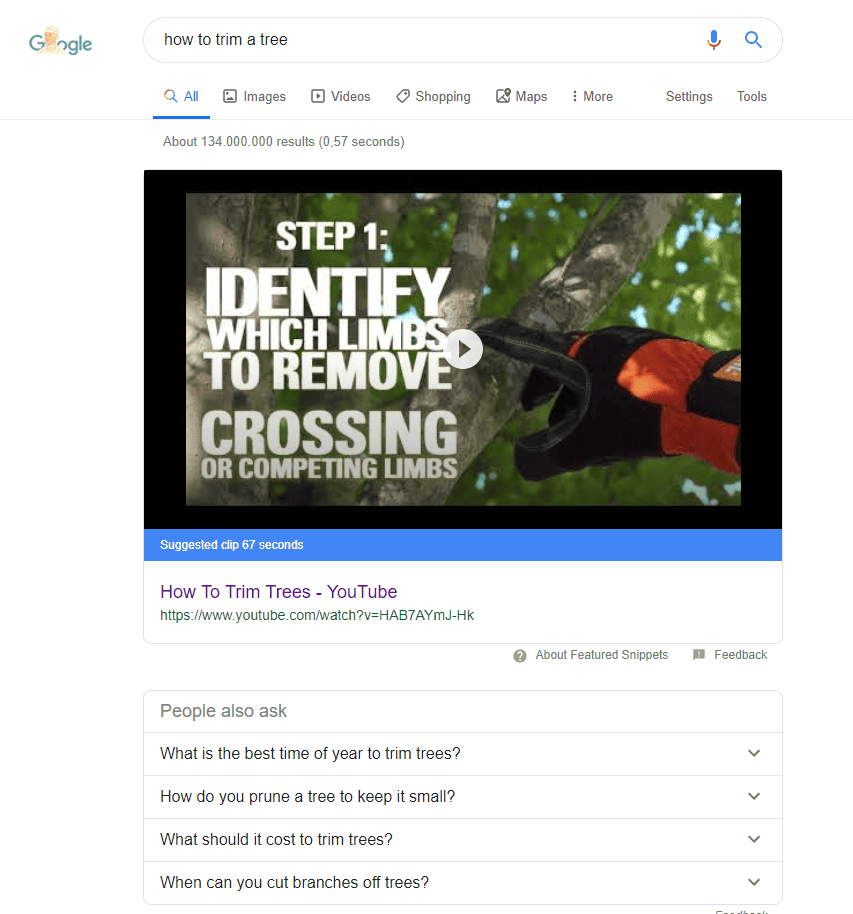
Google is the biggest search engine out there right now, but a lot of people forget that YouTube has its own search engine and is integrated with Google. This means when doing a search on Google you might be presented with a video result hosted on YouTube. If you search “How to trim a tree” on Google, the search result below appears. So, the top result is a video hosted on YouTube. Especially “How to” search queries will often prompt a video result.

So, how does YouTube work?
Just like the Google search engine, YouTube needs to sort and rank all the video content that is hosted. This, like Google, is sorted by an algorithm that takes in multiple factors into account. Below are some quick points on what to remember:

Get the basics right

Time spent viewing the video, length of the video, comments, social shares, and likes all matter to YouTube. Do what you can to make these things happen. Create content that is at least 1 minute long and remember share it on your other platforms to get as much engagement as possible.

Don’t be afraid to give a little bit away

When you’re doing video content you might be apprehensive to give all your knowledge, tips and tricks away. You might think “If I teach everybody to do the work I do as a treeworker, I will be out of a job” But this is very rarely the case. You have years of experience and training. Being a treeworker is not for amateurs and most people will see it that way. You can focus of sharing your knowledge on topics you know your target audience might be looking for. This might be content about tree maintenance, when to plant trees, how to ensure they grow properly, how to prune trees and shrubs. The list goes on.

Quality over quantity

It’s better to make one good video than 3 bad ones. The quality of the content is essential for answering the users search.

The title of your video matters.

The title of your video needs to have a title that includes your search term and something that makes it click worthy. This is very important. As the amount of clicks your video gets from users is also part of the equitation of how YouTube values the content.

Tag your video

YouTube has a function when your uploading vidoes, where you can tag your content with tags. Use your most important and relevant keywords here. Examples could be:

“How to cut down an oak tree”

“treeworking”

“treeworker”

“felling an oak tree”

“removing oak tree”

Describe your content

Remember to add a link to your website. This is very important – The whole reason we are uploading content is to get more business, so your customers need to find your website.

Make a unique text about your video and do not reuse it. Put together at least 180-220 words about your video and explain the gist of the context. Use the keyword that you are trying to rank for like “How to trim a tree”. Remember to use a language rich in synonyms.

Subtitles and transcriptions

Add a transcript of the video as this is also content used by the search engine to understand the context of the video. This is of course only relevant if you have speech in your video.

No keyword stuffing in your videos

Don’t make multiple videos targeting the exact same keyword. This also goes for your description and title – Don’t overuse your keywords. This will be viewed as spam by YouTube.

Add a custom thumbnail

YouTube gives you 3 images to choose from as a thumbnail. These are often not the best, so if you have the time upload an engaging image that users want to click. If this proves to bothersome then at least choose the best thumbnail YouTube provides. Remember getting clicks is important as the user will always click the video that looks the most interesting.

Make a playlist with your videos

Not only is this something that’s good for YouTube to understand the context of your videos, but your videos will autoplay once completed by the viewer. This means you get more views overall and the user might spend more time on your YouTube channel.

Cross posting content

Managing multiple platforms can be time consuming, so focusing on a few channels is always recommended. Most businesses use Facebook these days, and here your video content can also work.

Using music on YouTube videos

Remember to use music that won’t get you into trouble with copyright infringement. Using copyrighted music might mean your video can’t be uploaded to YouTube or will be removed and can cause legal problems. Luckily, there are several websites where you can find music for free use or where you just need to credit the artist in the video description.

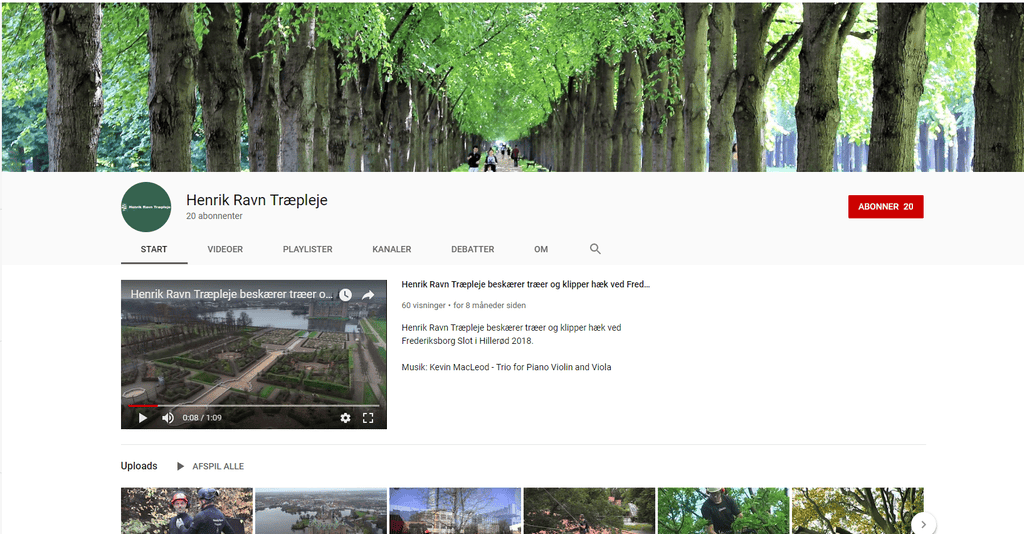
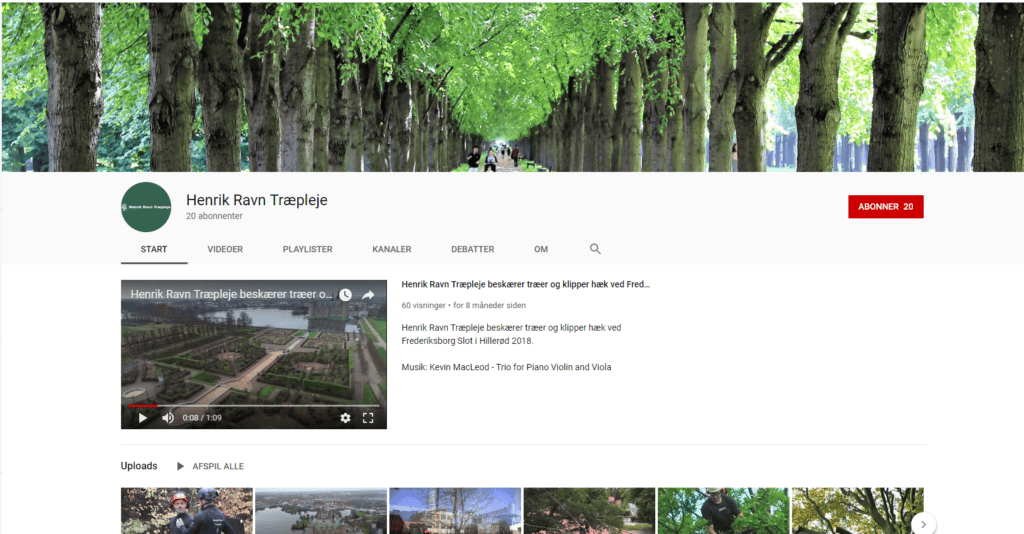
Case: Henrik Ravn Træpleje ApS in Denmark

Henrik Ravn Træpleje is a tree service company based in Copenhagen, Denmark. They have been working in the business since the 1960s and know keeping up with the competition and getting new clients is essential to keep their business growing.

Henrik Ravn Træpleje uses video content in their marketing for several reasons. The content is used on their website to display their company and who they are to their clients. A picture is work a thousand words, so video content immediately gives a sensation of the company and the members of the team.

What equipment does it take to make YouTube Videos?

A lot of results can be made with a GoPro, or just a regular mobile phone. Smartphones of today are advanced enough to shoot high quality video and produce content that works well on YouTube. Another option is using a drone if you have access to that. Drones have reached a price that makes sense for most and operators are common in video production companies, so the prices are not as steep as they were once. A drone can give some great landscape shots. Henrik Ravn Træpleje used a drone for these shots of their work in the royal gardens of Frederiksborg Castle near Hillerød, Denmark. https://www.youtube.com/watch?v=dDEP45KRaDI&t=3s

A small fish in a big sea

Several of Henrik Ravn Træplejes videos has between 1000-5000 views, even though they are based in Denmark which is a country with about 5.7 million citizens. This is achieved following the recipe above and also using local city names and regions in their video descriptions.

If you want to know more have a look at the Henrik Ravn Træpleje ApS YouTube Channel

New Space Offers New Opportunities

0

New Space Offers New Opportunities

By Alex Subak, School Director, ACRT Arborist Training

ACRT Services, a nationwide utility service consulting firm offering expert, independent consulting solutions to utilities and associated organizations throughout the United States, including vegetation management consultation and training, customized safety courses, technology solutions, and utility metering services, recently completed our relocation to a new corporate headquarters in Stow, Ohio. Our new space provides us with an additional 9,000 square feet of space for our growing organization.

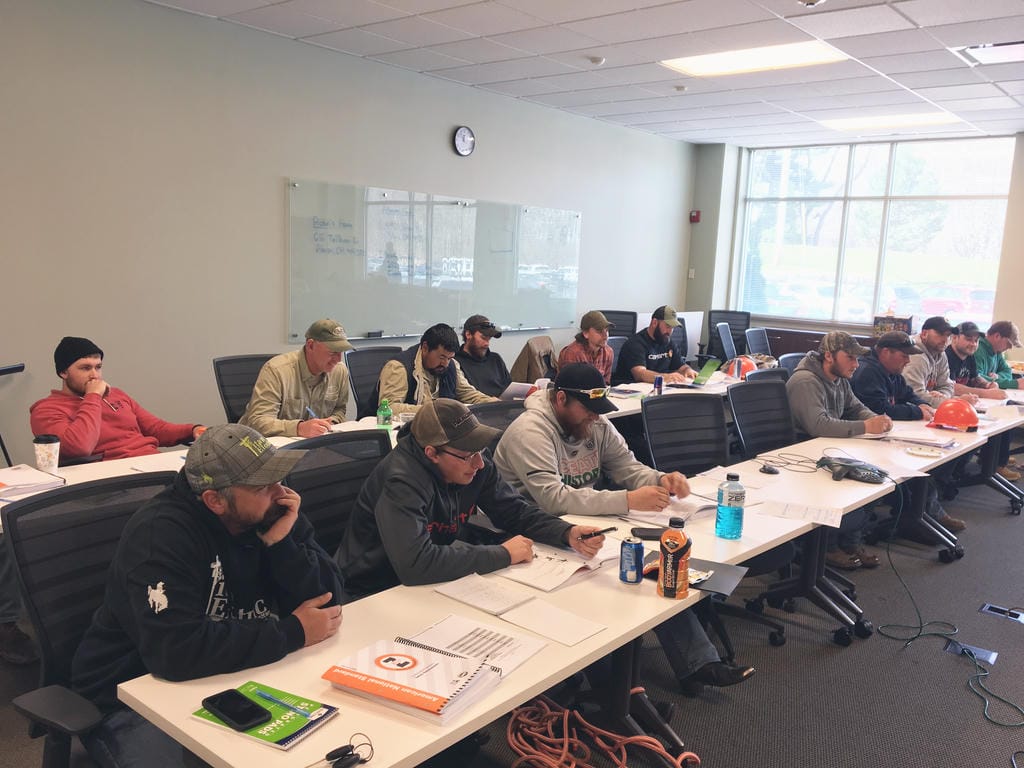
ACRT, a division of ACRT Services, focusing on vegetation management services, also has oversight of ACRT Arborist Training — a sub-brand that provides entry-level through advanced arborist classes and certifications for line clearance companies, government agencies, tree care companies, municipalities, and individuals around the nation. ACRT Arborist Training offers classes and workshops year-round, with training typically occurring on-site. Our new space supports the continued growth of our training division and opens the door for more students to receive training on-site than was possible at our prior location.

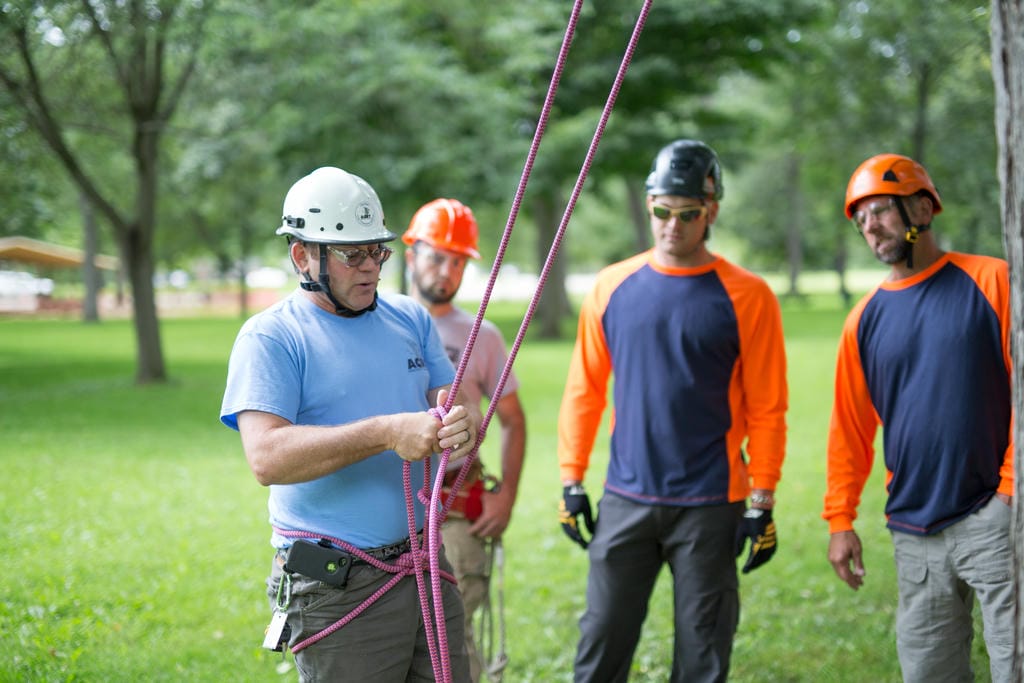
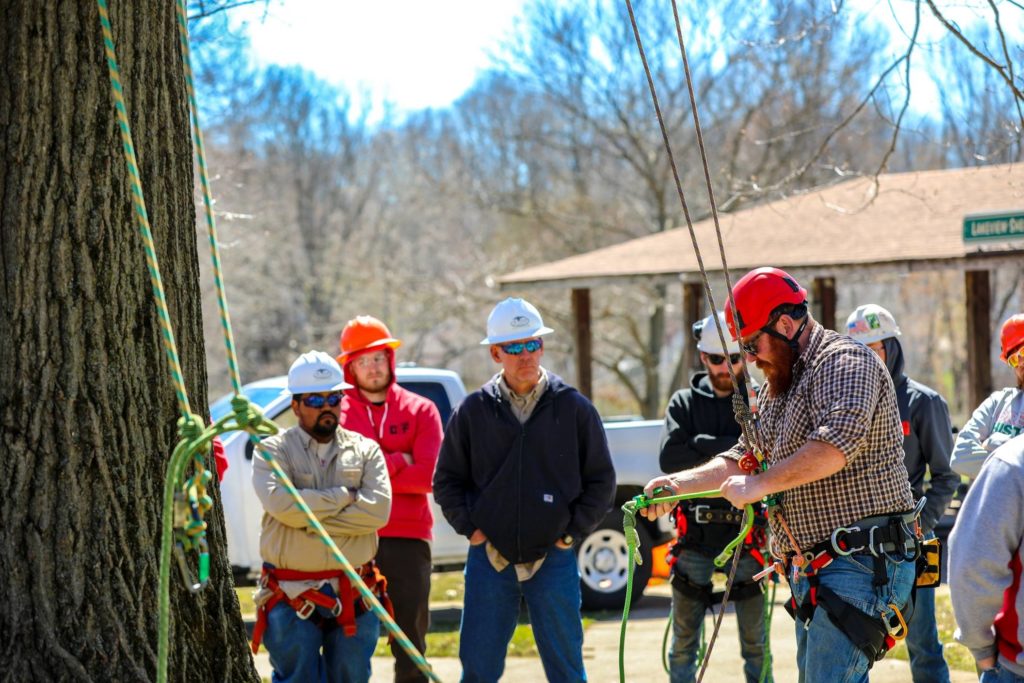
On April 1st, 2019, ACRT Arborist Training held the inaugural training class at our new headquarters. The training class was a Basic Arborist workshop where instructor Luke Sidey taught a variety of topics including introductory tree biology, knots used in tree work, entry-level climbing techniques and safety standards from the ANSI Z133 among many other subjects.

While most of the training classes we provide are private workshops for organizations across the country, we recognize that individuals need an opportunity to complete the training that employers and OSHA require. Our instructors spend most of their time on the road from California to New York, but they always enjoy the chance to come in to the corporate office and provide training for individuals who need it.

Even though we have had to adapt to the challenges of moving an entire operation to a new space, the environment we are using now offers much more room for the instructors and students to work in the classroom, or the field. Say the instructor makes a comment about tree identification; a student asks a question and the entire class could walk outside to see a real-life example of what was being discussed. We also have a local city park that provides us access to their grounds for training purposes, giving us a variety of trees to practice climbing.          

The classroom itself is bigger, and in this case bigger is better. With two large television monitors at the front of the room, students can follow along with the instructor’s presentation. Sometimes that is a knot tying diagram that the students will study and then be tested on, other times it is a safety video that is a sobering reminder of the inherent danger of tree work. In another case, students can diagram their own understanding of electric generation in the line clearance course by using both our glass board or white board at the front or back of the room, giving the classroom a dynamic and student-centered feel. 

Despite being in a new place, the ACRT Arborist Training principles remain the same; we provide industry-leading arborist training to individuals and companies in an effort to promote safety and education. Tree work can be dangerous and ensuring that a greater number of arborists have the training they need to get home to their families is on the forefront of our instructor’s minds. Students, especially those in the Basic Arborist course, are largely self-funded and interested in getting into an industry that they are passionate about. By the end of the class, the vast majority of students state how much they didn’t even know they were missing about the industry. They report feeling equipped to do the tree work they had in mind and energized to pass on the safety focus our instructors instill in them.    

The new training space is finally allowing us to schedule more classes for individuals at our location than ever before. We are pleased to announce that our Advanced Arborist course has been added to the schedule. Keep an eye on the ACRT Arborist Training website for the addition of new course offerings. It is important to keep the safety, education, and training conversation going. Be sure to reach out with any questions. To learn more about ACRT Arborist Training, visit, training.acrt.com.

Alex Subak holds a Bachelor of Arts in English and History, a Master of Arts in Teaching (MAT), and a teaching certificate from Kent State University. Alex has been with the Arborist Training department of ACRT since 2018.

The Simple Things?

0

By Todd Kramer, CTSP

The tree care industry brings us very diverse work, with assignments from the very simple to the very complex. One day we are structural pruning very small trees, and the next day we may be removing large dead trees over many obstacles. During my 29 years working in this industry, we have had many improvements in equipment and techniques, making the work often physically easier and more efficient. We are getting more work done every day than we did in the past.

With these improvements in equipment and techniques, one would think that our industry’s incident and injury rates would be declining. Unfortunately, that is not the case. Looking at TCIA’s monthly incident report or listening to Dr. John Ball talk about incidents and injuries in our industry, it seems this is not improving.

In our organization, we see a number of incidents every year. All of these incidents are investigated in an attempt to determine a root cause, “Why did this happen?” Was it a lack of training for the field staff, lack of communication from sales or management, a lack of training for sales and management, a lack of communication from the crew leader or a combination of all of these things?

With all of our incidents, there are very few that are “not at fault,” although those do happen. A few may have had circumstances that were out of our control, but honestly, not very many. Every quarter we review all of our incidents in every department and look for trends. Most of our incidents are happening on routine work that is not very challenging. Why is this?

During an aerial-rescue training session this year, I had a very good discussion with one of our crews. We were discussing what type of aerial rescue to practice that day – a spar rescue, a redirected rescue, a confined-space rescue, a static rescue or just a simple, basic rescue. The crew opted for a basic rescue. These are pretty simple to do and don’t really challenge a crew member. This led to more discussion, as I was just assuming the crew was feeling a bit lazy and didn’t want to get into difficult climbing/rescue during this training event. I led the discussion to emphasize the importance of practicing the more complex rescues, because it was my opinion that these are the situations where we are more exposed to an injury or incident. The crew disagreed.

The crew took over the discussion, making the point that they felt they were at more risk while doing the more routine, easier work. While performing the more challenging work, they felt they were switched on. Their level of focus was much higher, their communication skills were improved and that all of this was due to the fact that the consequence of a failure is much higher. We took this discussion to the next step.

I agreed with the crew that their level of focus is increased during complex or high-risk jobs. I also asked the question of why most of our incidents are, generally, during very routine, simple work? That’s when the discussion sort of fizzled away, not surprisingly. The conclusion of this training day lead to quite productive conversations. They defiantly agreed that they have a reduced lack of communication and focus on routine work. They also mentioned that some work looks routine on paper, but when they get to the actual job, it can be a different story.

We all know tree crews have a knack for getting work done. If they don’t have the right equipment or competent people on the job site, they often will simply try to get the work done with who and what they have. This is not the best idea and is where a culture of open communication is very important. If the crew felt they would get push-back from management, this leads to a culture of “just get it done,” potentially leading to incidents or injuries.

One example they gave was a two-man job of simply shaping some arborvitaes. All they needed was a stepladder and some hedge trimmers. Turns out the arborvitaes were too tall, and the workers put themselves at risk in an attempt to get the job done. This is where the importance of planning on the front end is very important and communication among the crew is crucial.

Another example is from an organization in the Northeast. They have many full-time seasonal workers and their summer/busy season seems to go really well with few incidents. As the winter months come and the seasonal crews are no longer there, their incident rate increases. The full-time, year-round crews are all seasoned veterans and most are crew leaders. Now they have the most skilled and experienced staff all working together, yet their incident rate increases. Why is this?

The work we do is very diverse, and the people we do it with can be as well. When we are assuming we have the confidence of the staff around us, we may become complacent and lose focus. If our work is not properly planned before we get there and the crew has an attitude of “we must get this done,” even if we don’t have the proper equipment or competent people with which to do it, this could lead to incidents and injuries.

We need to treat every task with the same importance, whether it’s simple or complex. Communication from management, sales personnel and crew leaders needs to be thorough and open for discussion and questions. Balancing all of this could lead to jobs being completed with high quality and good productivity while also doing a better job of managing safety.

Todd Kramer, CTSP, is director of field operations/education for Kramer Tree Specialists, Inc., an accredited, 30-year TCIA member company based in West Chicago, Illinois.

*this article first ran in the June 2018 issue TCI Magazine and is reprinted with permission